Help protect their mobility. Know the signs .

Help protect their mobility. Know the signs .


Chondrodysplasia vs Chondrodystrophy. What's the difference?
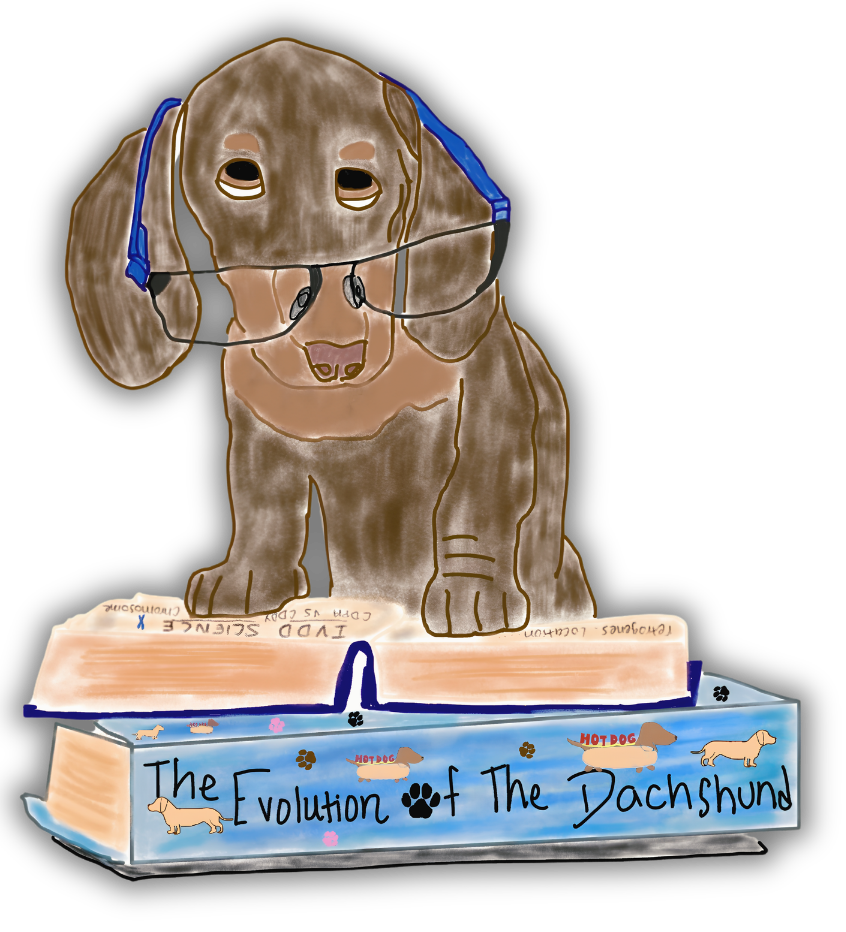
Chondrodysplasia (CDPA) causes the classic short legged body shape seen in breeds such as Dachsunds, Corgis, and Bassat Hounds.
Chondrodystrophy (CDDY) also causes short legs, but it also causes the spinal discs to degenerate earlier than normal, leading to IVDD and a higher risk of disc herniation.
What is the science behind IVDD?
Scientists at the University of California Davis discovered that a gene called FGF4 (fibroblast growth factor 4) affects how dogs develop.
The normal FGF4 gene is located on Chromosome 18, which is associated with the short leg phenotype (CDPA).
At some point, an extra copy of the FGF4 gene (retrogene) is created and inserted into a different location in the DNA.
A retrogene is a copy of a gene that is made from RNA and inserted into a new location in the genome. This can change how the body develops.
5A. Insertion on Chromosome 18 (CDPA)
5B. Insertion on Chromosome 12 (CDDY)
The extra FGF4 copy (retrogene) is inserted on Chromosome 18.
The extra FGF4 copy (retrogene) is inserted on Chromosome 12.
Dogs can inherit these FDF4 retrogenes from their parents. Where the retrogene is located, Chromosome 18 or Chromosome 12 affects what traits it is associated with.


Illustrations 5A and 5B demonstrate the difference between CDPA and CDDY.
Associated with CDPA (short legs).
Does NOT directly cause early disc degeneration (IVDD).
Not currently associated with increased IVDD risk seen with the Chromosome 12 retrogene.
Associated with CDDY (short legs).
Associated with premature intervertebral disc degeneration.
Increases risk of IVDD / disc herniation.
Associated with CDPA (short legs).
Does NOT directly cause IVDD.
Not currently associated with increased IVDD risk with the Chromosome 12 retrogene.
How is CDDY Inherited?
Each puppy gets one copy of each chromosome from their mom and one from their dad.
That means a puppy can inherit:
0 copies of CDDY
1 copy of CDDY
They did not inherit the CDDY varient from either parent.
They inherited CDDY from one parent. One copy is enough to increase their risk of IVDD.
2 copies of CDDY
They inherited CDDY from both parents. They have two copies of the risk varient.
Please refer to illustrations 6A, 6B, and 6C for a visual example.
CDDY is a risk factor, not a diagnosis. Having one or two copies does not mean a dog will definitely develop IVDD.
Other factors such as environment, weight, anatomy, other genes, activity, and lifestyle all play a role.
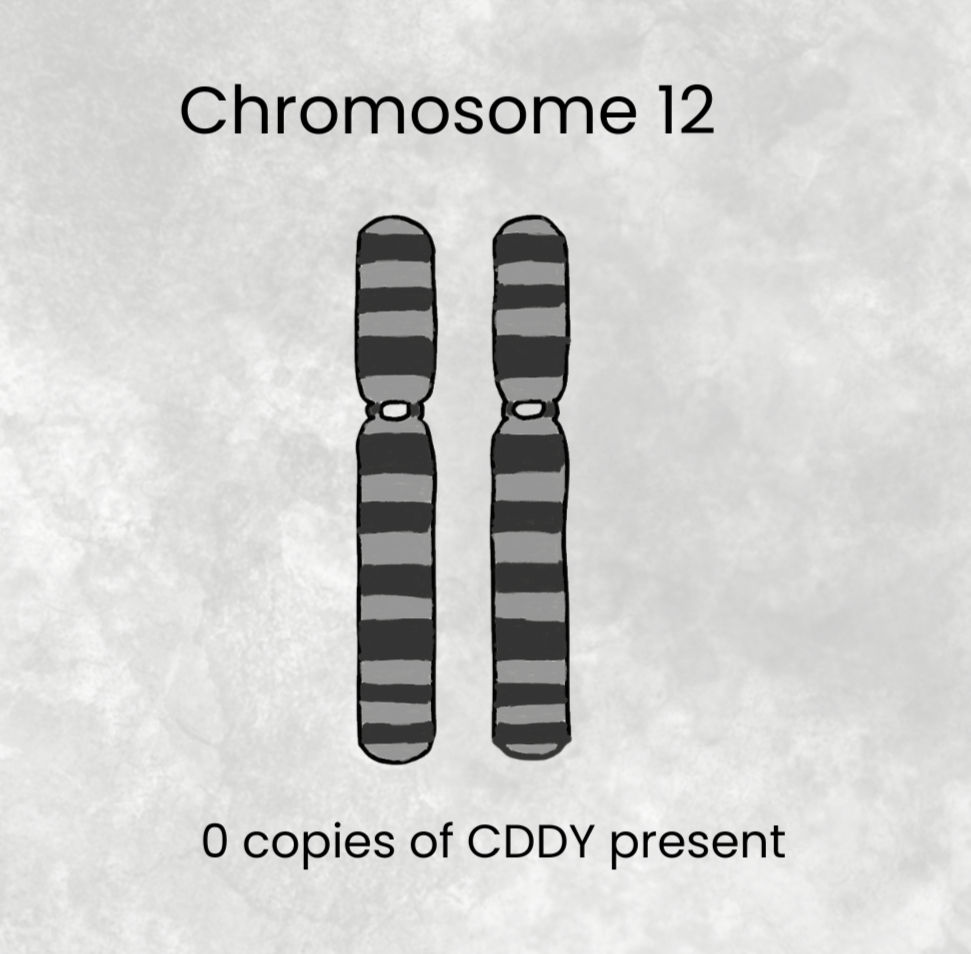
Illustration 6A
Neither chromosome 12 has the CDDY insertion.

Illustration 6B
One chromosome 12 has the CDDY insertion.

Illustration 6C
Two chromosome 12s has the CDDY insertion.
.png)