Help protect their mobility. Know the signs .

Help protect their mobility. Know the signs .


Did you know?
A slipped disc in people is similar to IVDD in dogs... the only difference is we cannot tell you how we feel!

Intervertebral Disc Disease (IVDD) is a condition that affects the discs between the bones (vertebrae) of your dog. Some breeds are genetically predisposed to developing IVDD.
These discs act like cushions or shock absorbers between the vertebrae. When a disc degenerates, it could result in bulging or herniation, putting pressure on the spinal cord and nerves.
What is IVDD?
Many owners are unaware their dog has IVDD until their dog shows devastating symptoms.
The Anatomy - Spine
Illustration 1A, demonstrates the dog spine with the cervical, thoracic, and lumbar vertebraes labeled. Spine is not not drawn to scale.
A dog's spine is designed for both stability and fluid motion. It consists of interlocking vertebrae that protect the delicate spinal cord, separated by shock-absorbing discs.
_edited.png)
These soft cushions allow your pet to run, jump, and play while maintaining the structural integrity of their entire body.
There are three sections to the spine:
Cervical (neck)
Thoracic (mid back)
Lumbar (lower back)
Illustration 1A is a visual representation of a dogs spine.
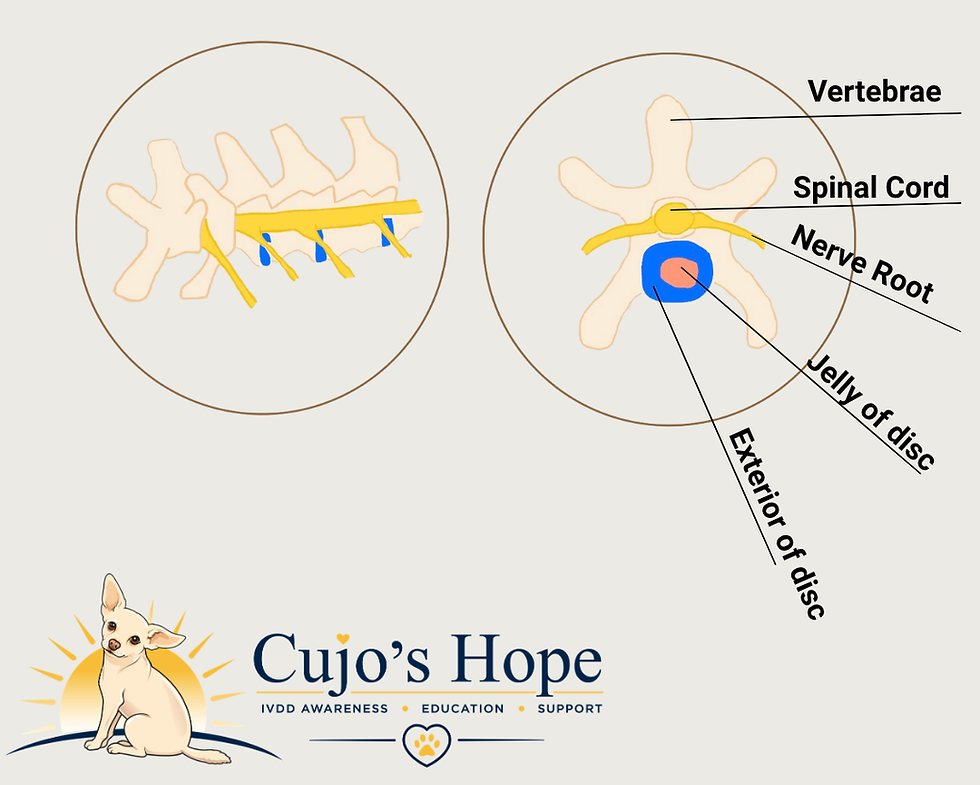
Illustration 1B is a visualization of part of the spine up close and the disc contents labeled.
Illustration 1B offers a detailed perspective of the spinal discs, featuring a lateral profile left and a frontal angle right.
Please note that these drawings are not drawn to scale. Cujo did her best. 🤭
What Happens When A Disc Degenerates?
The discs gradually lose moisture, become firmer, lose flexibility, and provide less cushioning.
This could result in a damaged disc bulging or herniating, which puts pressure on the spinal cord.
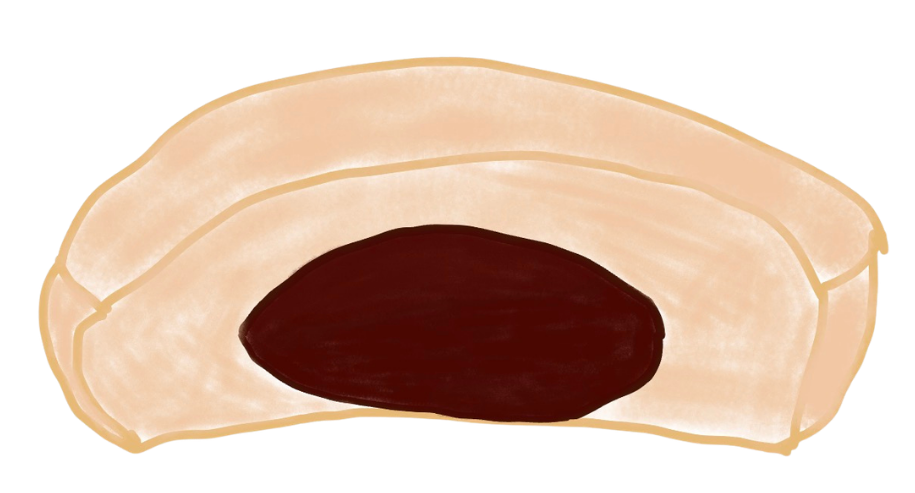
In dogs with IVDD, the jelly gradually loses moisture and becomes firmer, like the filling in a jelly donut left out for several days, as shown in Illustration 2A.
As the disc loses moisture and becomes firmer, another change can happen: calcification.
Healthy Disc
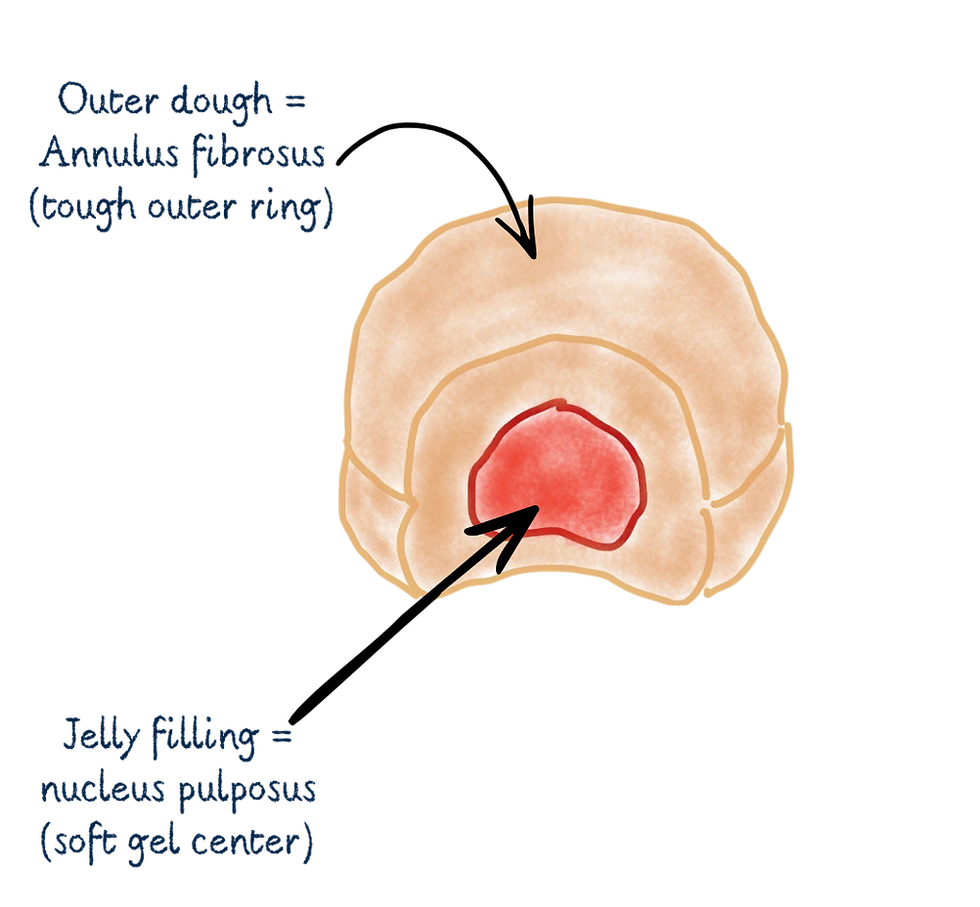


The jelly is soft and full of moisture.
The jelly slowly loses moisture, causing it to dry out and shrink.
Imagine a stale jelly donut. As you slowly press down on it, the dried out jelly and weakened dough cause the donut to gradually buldge outward instead of bursting.
Imagine a dog jumping off the couch. The brittle, hardened filling suddenly tears through the outer dough and bursts out the side
It cushions the spine by absorbing shock.
The disc gradually loses its ability to absorb shock.
Degeneration
Bulging Disc (Hansen II)
Ruptured Disc (Hansen I)
Illustration 2A, visual representation of the jelly donut degenerating, bulging, and rupturing.
*
What is Calcification?
Calcification can happen as a disc generates and the soft, gel like material inside becomes firmer and more mineralized. This makes the disc less flexible than it once was.
Seeing calcification does not mean that a specific disc will definitely herniate. It does, however, show that changes are happening within the disc and can be associated with a higher risk of IVDD.
The underlying disc degeneration does not simply return to normal, even if calcification becomes less noticeable on future X-rays.