Help protect their mobility. Know the signs .

Help protect their mobility. Know the signs .


Camber's Story
Camber was diagnosed with Stage 5 IVDD in July 2025 at just five years old. After suddenly losing the use of his back legs, he underwent emergency surgery.
His recovery was long and challenging, requiring months of dedicated care along with ongoing physiotherapy, acupuncture, laser therapy, and massages.
Today, IVDD is simply part of our life, it does not define it.
Camber still gets to enjoy everything he loves, especially riding in his pram. We still enjoy café visits, sniffaris, dressing up for adventures, meeting new friends, and exploring the world together. We make a few adjustments to keep him safe, but we don't let his diagnosis stop him from living a full and happy life.
One of the biggest lessons I've learned is that an IVDD diagnosis doesn't mean the end of your dog's quality of life. With the right care, patience, and management, they can still thrive.
Camber is living proof of that, and I hope his story gives other families hope when they need it most.
Written by Camber's Pawrent





Photos courtesy of Camber's family. Used with permission.
Louie's IVDD story stated in April 2024 he was not acting like himself and wasn’t moving normally. I took him to the emergency vet where they kept him overnight to monitor. They mentioned IVDD and our options. Because he was feeling better and not showing too bad of signs he came home the next night with the strict orders of crate rest for 8-10 weeks, and gabapentin/trazadone. I set everything up in his crate for him and even slept on the floor with him that night. He woke up very early in the morning in pain but this time he was unable to move his back legs at all. I called the vet back and they told me to take him to UPenn (it was a Sunday and they didn’t have a neurologist onsite and what I learned is many emergency vets didn’t have any neurologists on call on Sundays). The day was a blur of facts/questions/plans/what ifs. Since he was unable to move it was decided surgery was most likely needed and that he needed an MRI. They did the MRI found that he ruptured 3 discs in his lower back
They kept him there for I wanna say a week (it really was a blur) they gave him a 50/50 shot and I tried everything. I did acupuncture, PT, laser therapy, aqua therapy, you name it I tried it. Eventually it was decided this is his life. As traumatic as it seemed at the time (and a lot of decisions had to be made quickly) I am so happy with how everything turned out. He is still his same happy self and will be turning 6 in November. He has been paralyzed for over 2 years and I don’t remember him any other way. When I put the wheels on him for the first time he zoomed off right away!! There was no learning curve, no hesitation, no fear. And he’s been happy ever since. They truly are the most resilient little things!! We’ve learned how to navigate life differently together but the adventures are the same.
These days, I may get a few crazy looks pushing him around in a stroller, but this journey has taught me more than I ever expected. Louie may be paralyzed, but he is also the happiest, most resilient dog I know.
I wrote the children’s book as my way of sharing Louie’s story and teaching kids about acceptance. Also, that challenges do not define us, it’s how we face them that truly matters. It’s okay to be different, and sometimes the things that make us different are what make us the strongest. 💛
Special shout out to Claire Conway for the illustrations and making this story come to life!
Click on the picture if you want to purchase the book:
Louie's Story

Written by Louie's Pawrent
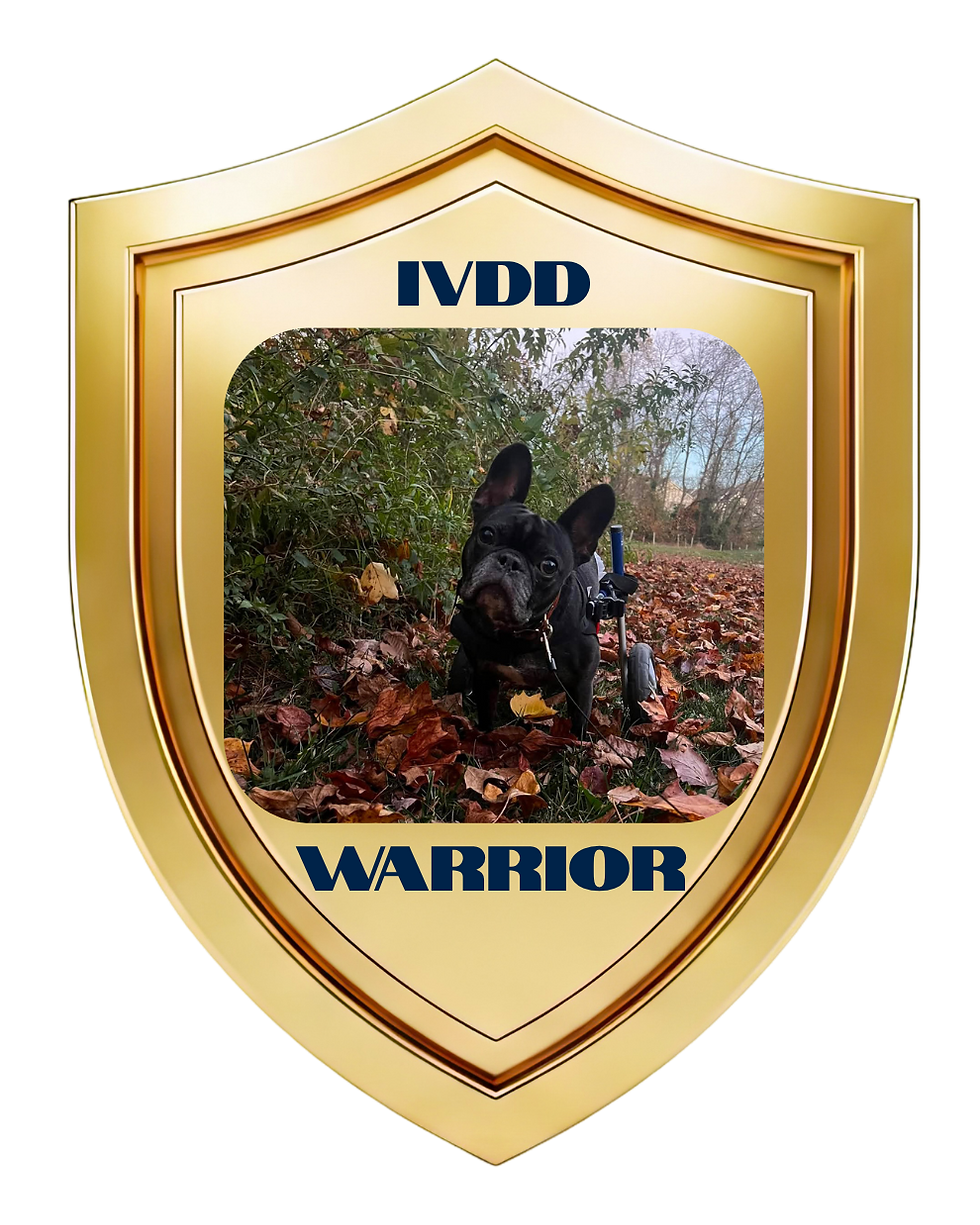

Photos courtesy of Louie's family. Used with permission.
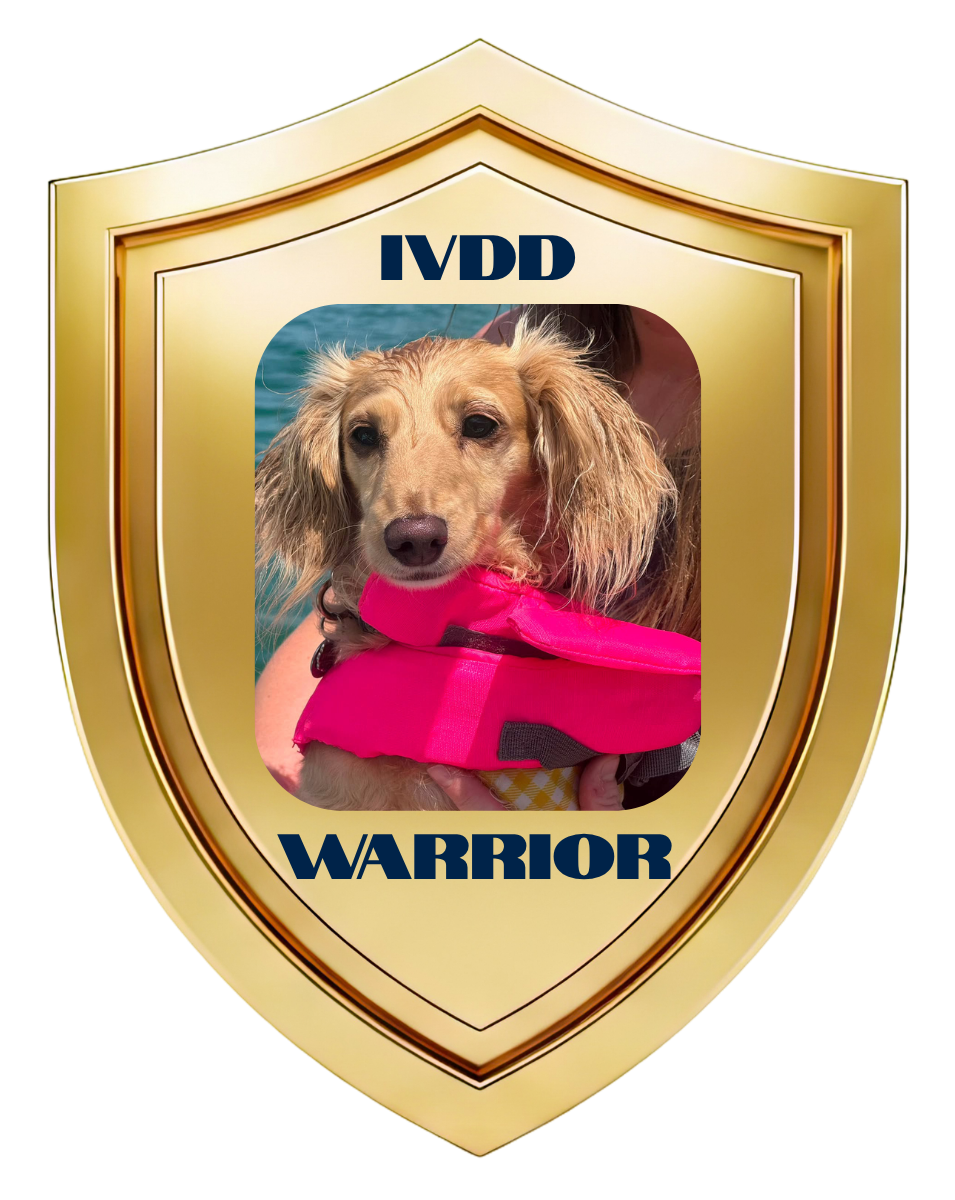
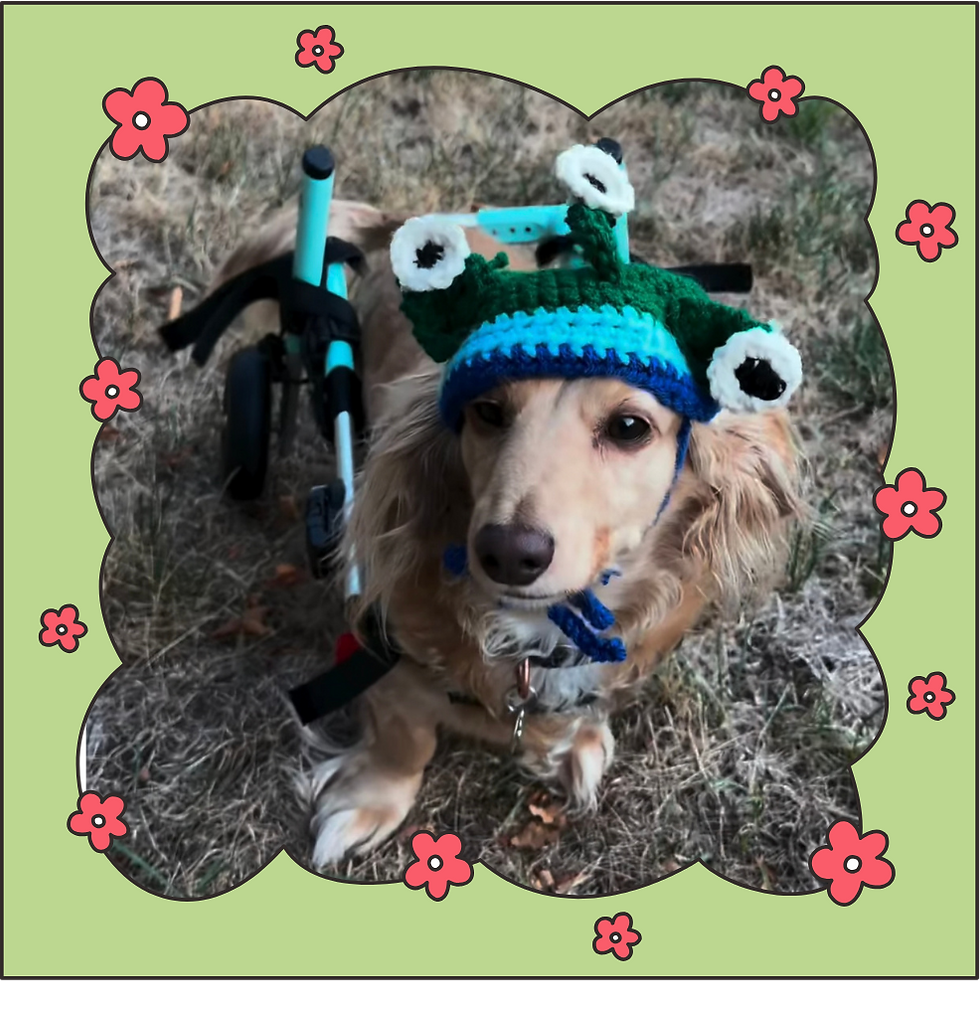
Winnie is a 6-year-old mini dachshund who was diagnosed with IVDD in March 2026. While the diagnosis completely turned our world upside down, it didn’t stop Winnie from being the happy, adventurous little dog she’s always been.
These days, Winnie uses her wheelchair, goes to physical therapy, and works incredibly hard on the underwater treadmill to build strength and regain her mobility. Every tiny improvement is worth celebrating, and she continues to surprise us with her determination and resilience.
Winnie still loves going on adventures, exploring new places, meeting new people, and making everyone smile. She has taught me that life after an IVDD diagnosis can still be full of joy, fun, and meaningful moments. Our goal is to show other families that while the journey isn’t always easy, dogs with IVDD can absolutely continue to live happy, fulfilling lives.
Winnie's Story
Written by Winnie's Pawrent
.png)
Photos courtesy of Winnie's family. Used with permission.
Ted's Story
Hi, I'm Ted. I'm a 7-year-old dachshund with Stage 5 IVDD.
The truth is, my mom did everything she could to prevent this. She kept me lean, limited my jumping and stairs, took care of my back, used a harness, and paid attention whenever something seemed off. She always tried to make the safest choices for me.
But IVDD doesn't always play by the rules.
I went from walking to completely paralyzed in less than 24 hours.
One day I was me. The next, I couldn't move my back legs. I couldn't pee on my own. I couldn't control my bowels. Our lives changed overnight.
I underwent emergency surgery and spent 6 days in the hospital. Now, I'm home, learning how to live in a body that works differently than before.
So here we are.
Learning how to express my bladder. Cleaning up accidents. Doing exervises. Celebrating tiny victories. Finding humor where we can/ Holding on to hope when things feel heavy.
Every day isn't easy, but every day we're finding a new light.
We're taking this journey one day at a time, praying for healing, celebrating progress no matter how small, and believing that there are still good days ahead.
Written by Ted, approved by his pawrent


Photos courtesy of Ted's family. Used with permission.
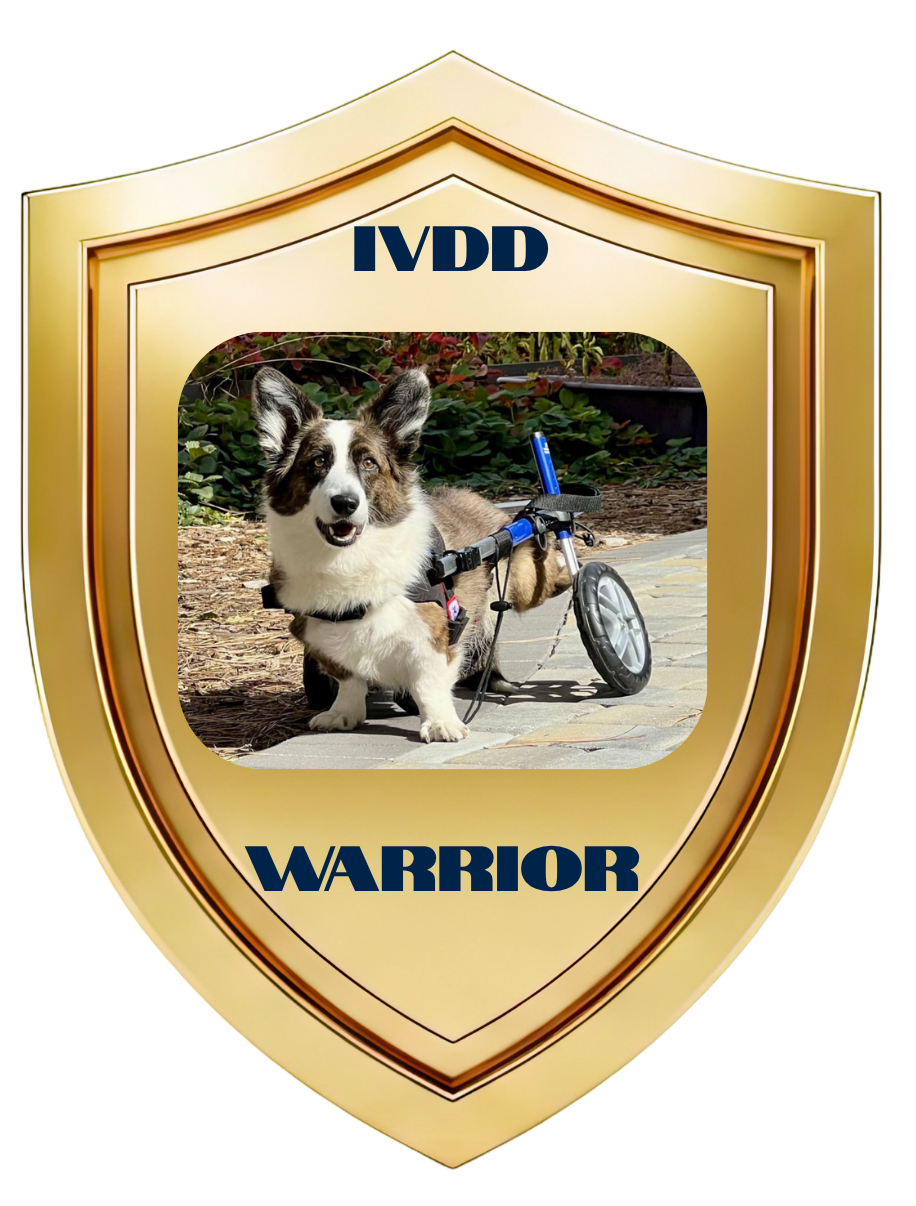
Sadie Mae is 7 years old and an IVDD survivor for 2 years. She had an unsuccessful surgery, but is here to shine!
Sadie Mae is orginally from Colorado and came to Ohio after her surgery rehab.
She was chosen chosen to race the Detroit Lions Little Stumps Race and went viral! Her instant love for racing, start line excitement and POV race videos show the world how IVDD dogs can live an amazing life.
Also, she was the Ohio State Corgi Race winner againist able dogs and Corgi Nationals 2026 Racer.
Sadie Mae has been featured on Good Morning America (GMA), American Broadcasting Company (ABC) News and Sports Center.
She loves playing ball and enjoys eating peanut butter ice cream. People suggested Sadie Mae should have been euthanized and that surgery was not worth the money, assuming she wouldn't have a good quality of life.
Well, she is here to show the world her "can do it spirit."
Her motto is Keep on Rollin!
Sadie Mae's Story
Written by Sadie Mae's Pawrent

Photos courtesy of Sadie Mae's family. Used with permission.
Our sweet girl Violet is a 6-year-old Pittie/Staffy mix and the happiest, most loving girl. We foster-failed her three years ago, and a few months ago decided to do a DNA test because we were curious about her breeds and health.
Her health panel showed that she had inherited a gene associated with an increased risk for IVDD. It was the first time we ever heard of IVDD, so of course, we started researching. But, Violet had never shown any symptoms. She was ccompletely healthy and incredibly active. We went on long hikes, took her camping, let her swin in rivers, and brought her along on all kinds of adventures, so we weren't overly concerned.
Then came June 20, 2026.
Violet woke up that Saturday morning with wobbly back legs and a tense back. We had no idea what was happening, but luckily one of our friends is a veterinarian and came over to examine her. She noticed that she she turned Violet's back paws under, Violet wasn't correcting them normally. And while our friend was still there talking to us, Violet started having more difficulty standing.
She immediately told us to take Violet to an emergency vet. They took her back for X-rays, and by the time they returned to speak with us, Violet's condition had already progressed. She was in more pain and could no longer use her back legs.
We were transerred to a hospital with a neurology department, but since it was the weekend, we couldn't find a neurologist available in our city. So, we drove two hours to a university veterinary hospital.
A MRI revealed that Violet had 9 herinated discs. We were in complete shock. How could our healthy girl have that much damage when she had only started showing us something was wrong that morning?
We were told that hers was an extremely rapid and severe case of IVDD. By this point, Violet was paraplegic and had lost deep pain sensation.
Her doctors were also very concerned about progressive myelomalacia, a potentially fatal complication that can occur after a severe spinal cord injury. They needed to operate as soon as possible to decompress her spinal cord and give her the best chance they cold.
During surgery, they were able to address six of the nine affected discs to remove some of her spine and relieve pressure on her spinal cord.
We are almost 9 weeks post-op.
Our lives look very different than they did before IVDD. The adjustment has been incredibly hard, and we are still learning what Violet's recovery and future will look like. But the most amazing part of all of this has been Violet.
She has adapted to every change. She still wants to play. She still wants to explore. She still wants to be included in everything. And she reminds us every single day that she's still the same Violet she was before IVDD.
We don't know yet how much function she will regain, but we do know that she isn't giving up, and neither are we!
Violet's Story
Written by Violet's Pawrent

Photos courtesy of Violet's family. Used with permission.


Dottie's Story
Not much is known about Dottie’s initial IVDD diagnosis. She was brought to a shelter in February 2025, unable to use her back legs. She was 3 years old at the time. Thankfully, the shelter contacted Queen’s Best Stumpy Dog Rescue, who raised the funds needed for her spinal surgery.
Dottie had a successful spinal surgery in March 2025. During surgery, the doctor found that her disc ruptured several weeks earlier, leaving a significant amount of damaged material that needed to be cleaned up.
We met Dottie at a dog adoption event in May 2025 and were instantly charmed by her. She came home with us in August 2025. Around that same time she had just started standing on her own, surprising both us and her rescue.
Since then, Dottie has continued to make steady progress. She has gained strength, balance, and mobility. She now spends less time in her wheelchair. When she does use her wheels, she gets around comfortably and easily. She’s just happy anytime she can explore outside.


Written by Dottie's Pawrent
Photos courtesy of Dottie's family. Used with permission.
Oscar's Story
We started our day off as we usually do and took the dogs for a walk. Oscar was fine and seemed to be his normal and happy self. When we got home we noticed how he struggled to get over a small step through the front door. It’s something he does most days and has never had any issues. After a couple of hours we noticed his wobbling. He was progressively getting worse and was very reluctant to move. Our vet was amazing and got us an appointment straight away. When we got to the Vet she knew what it was before any assessment. He was diagnosed with stage 3 IVDD. It was a huge huge shock for us, as all the symptoms appeared within about 5 hours of the walk. The vet told us he would need to be on strict crate rest for 6-8 weeks with the potential for surgery if that didn’t work. They gave us some meds to help with the pain and some sedatives to help keep him as relaxed as possible.
We got lots of engaging things to help keep him stimulated whilst in the crate. These were a life saver.
It took time but, after about 5 weeks we saw some changes in Oscar. It’s never easy to see your dog in pain or in a crate and locked away but we knew in the long run, it was what we had to do to help him. We kept him there for 9 weeks in total, with recommendation from the vet, and now he’s on the next stage of his recovery. He’s now able to go on short walks again and is able to play with his brother. We thought this would be a limit to Oscar’s life but in fact with hard work and patience he is now in a place where he can live a normal life again. We still have a lot of recovery and building up to do but there is light at the end of the tunnel. IVDD is scary and daunting, but it’s absolutely possible to come out the other side with a happy and healthy pup!

.png)
Photos courtesy of Dottie's family. Used with permission.
Written by Oscar's Pawrent